


 Free Newsletter

US Supreme Court declines to pause order holding Apple in contempt in Epic Games lawsuit
Reuters//May 7, 2026//

Smartphone with Epic Games logo is seen in front of Apple logo in this illustration taken, May 2, 2021. REUTERS/Dado Ruvic/Illustration
US Supreme Court declines to pause order holding Apple in contempt in Epic Games lawsuit
Reuters//May 7, 2026//


Summary:
- Supreme Court denies Apple‘s request to pause contempt order
- 9th U.S. Circuit Court of Appeals upheld contempt ruling
- Apple must return to district court over app commission disputes
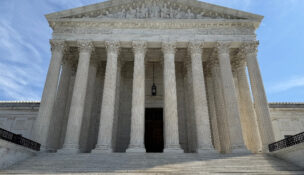
The U.S. Supreme Court rejected on May 6 Apple’s request to temporarily block a judicial order that found the iPhone maker in violation of sweeping court-mandated changes to its lucrative App Store as part of an antitrust lawsuit by “Fortnite” maker Epic Games.
Justice Elena Kagan, on behalf of the court, declined to pause a ruling by the San Francisco-based 9th U.S. Circuit Court of Appeals that deemed Apple in contempt in the Epic lawsuit contesting App Store fees.
The Supreme Court’s action means Apple will return to U.S. District Judge Yvonne Gonzalez Rogers in Oakland, California, to quarrel over what commission the company can lawfully charge for certain app-related transactions. Apple’s bid at the Supreme Court had been aimed at staving off returning to the trial court while it pursued its legal challenge before the justices.
Epic Games Chief Executive Tim Sweeney said in a statement that “the Supreme Court has considered Apple’s delaying motion and found it unworthy.”
Apple did not immediately provide comment.
Apple and Epic have clashed for years over the rules governing Apple’s App Store. The contempt ruling and the scope of Apple’s court-ordered obligations are the latest issues in the dispute to reach the Supreme Court. Apple has said the 9th Circuit decision would affect how millions of app purchases are made.
Epic Games won the contempt order last year as part of litigation it brought in 2020 seeking to loosen Apple’s control over transactions in applications that use the company’s iOS operating system and its restrictions on how apps are distributed to consumers.
Apple mostly defeated Epic’s lawsuit, but was required in the judge’s 2021 injunction to let developers include links in their apps directing users to non-Apple payment methods.
Apple allowed the links but adopted new restrictions, including a 27% commission on developers for purchases made on payment systems outside the App Store within seven days of clicking a link. Apple charges developers a 30% commission for purchases within the App Store.
Epic argued that the new 27% commission flouted the earlier injunction. In 2025, the judge found Apple in civil contempt for violating the injunction.
The 9th Circuit in December upheld the judge’s contempt finding but allowed Apple to make new arguments about what commission it should be allowed to charge for digital goods bought in apps distributed through the App Store but paid for using third-party payment systems.
In the district court, Sweeney said, Apple must now disclose the costs involved in reviewing apps that use competing payment systems so developers can be billed accordingly.
Apple has denied violating the judge’s order and has argued that the injunction should not be applied to millions of developers beyond Epic Games.
“Regulators around the world are watching this case to determine what commission rate Apple may charge on covered purchases in huge markets outside the United States,” Apple told the Supreme Court in a filing.
Epic has argued that Apple should not be allowed to sidestep the judge’s original injunction, saying this would “give Apple more time to continue unfairly profiting at the expense of consumers and app developers.”
(Reporting by Mike Scarcella; Editing by David Bario and Will Dunham)
Related Articles
Related Content



Top Legal News
- SCOTUS News: Court rules customs agents can turn back asylum seekers
- Limited hearing ordered on counsel’s failure to use evaluation report
- As Supreme Court’s term nears its end, three major Trump rulings due
- SCOTUS News: State concealed-carry restriction violates 2nd Amendment
- File-sharing conviction qualifies as crime of child abuse under immigration law
- World court judges sue Trump administration over sanctions
- SCOTUS News: Justices shut down Roundup failure-to-warn claims
- Conservative court candidate’s ties to convicted sex offender draw scrutiny
- Sentencing enhancement vacated for lack of predicate felony findings
- Trump’s power takes center stage in US Supreme Court’s home stretch
- Fraud claims against hospital revived in surgery dispute



Commentary
- When is a PIP an adverse employment action?
- Legally Speaking: What spring can teach us about active listening
- A useful patent management government notice
- Opinion: NC judges have enormous power. Be sure to vote in November
- The third option: Why your best employees are quietly losing their edge
- AI divorce is real, but family law can still save itself
- ‘AI won’t take your job’ and other things CEOs say before the layoffs
- When not to believe (your lyin’ eyes)
- Conduct a technology audit to improve law firm efficiency
- When the client brings ChatGPT to the consultation
- Content Marketing: Where law firms lose referrals and how to prevent it
- Your best people are not leaving for more money — they are leaving because you stopped paying attention
