


 Free Newsletter

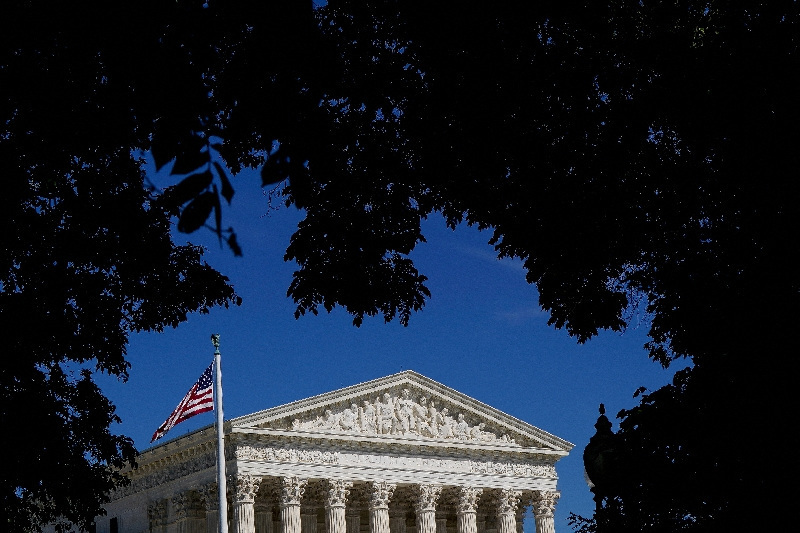
FILE PHOTO: A general view of the U.S. Supreme Court building in Washington, D.C., U.S., May 12, 2026. REUTERS/Elizabeth Frantz/File Photo
US Supreme Court rebuffs pharma challenge to Biden-era drug price
Reuters//May 19, 2026//


Summary:
- US Supreme Court rejects appeals by six pharmaceutical companies
- Inflation Reduction Act enables Medicare drug price negotiations
- 3rd and 2nd Circuit courts upheld government in related cases
The U.S. Supreme Court declined on May 18 to hear a pharmaceutical industry challenge to a plan to curb Medicare drug prices adopted during Democratic former President Joe Biden’s administration that drugmakers argued illegally forces them to accept steep discounts and jeopardizes innovation.
The justices turned away appeals by Novo Nordisk, AstraZeneca, Janssen Pharmaceuticals, Bristol Myers Squibb, Novartis and Boehringer Ingelheim. They left in place decisions by lower courts rejecting various legal claims against the drug price negotiation plan, which was part of Biden’s signature Inflation Reduction Act of 2022.
Aiming to rein in the rising cost of prescription drugs, the law targets for price negotiation certain medications that have resulted in high expenditures for Medicare, the U.S. government health insurance program for people 65 or older.
The plan could impact costs for patients as drug coverage affects out-of-pocket payments and premiums for Medicare beneficiaries. Americans pay more for pharmaceuticals than people in any other nation.
The law requires a drugmaker to negotiate a maximum price for specific medicines directly with the Centers for Medicare & Medicaid Services (CMS), the federal agency that runs Medicare, or withdraw all of its drugs from those programs. Failure to reach an agreement on price can result in steep daily excise taxes.
Despite multiple lawsuits, the first negotiated prices on 10 drugs went into effect this year.
Republican President Donald Trump’s administration is defending against the industry’s challenges and cited the plan as part of its efforts to reduce prescription drug costs.
“Under President Trump’s leadership, CMS is taking strong action to target the most expensive drugs in Medicare,” CMS Administrator Mehmet Oz said in January, touting the latest drugs selected for negotiation.
The six companies whose appeals are before the Supreme Court sued after CMS targeted their medications for price curbs. They made various legal claims, many grounded in their contention that the drug pricing plan is not a negotiation at all, but rather a scheme to impose upon them government-dictated price controls.
The drugmakers variously argued that the plan violates the U.S. Constitution’s Fifth Amendment by undermining their due process rights or taking their property without compensation, and the First Amendment guarantee of free speech by forcing them to convey the government’s views on what constitutes fair drug prices.
Novo Nordisk, a Danish pharmaceutical company whose insulin products were targeted by Medicare, also argued that the law improperly delegates legislative authority to an executive branch agency, violating the Constitution’s separation of powers among the different branches of government.
The Philadelphia-based 3rd U.S. Circuit Court of Appeals sided with the U.S. government in five of the companies’ lawsuits, while the Manhattan-based 2nd U.S. Circuit Court of Appeals also sided with the government in the case of German drugmaker Boehringer Ingelheim.
(Reporting by Andrew Chung in New York; Editing by Will Dunham)
Related Articles
Related Content






Legal Tech
- How ransomware tactics against law firms are changing
- How large language models are leveling the personal injury playing field
- Attorney Share, Lawmatics integrate to automate law firm referrals
Top Legal News
- Legally Speaking: How communication failures turn disputes into lawsuits
- AG Jackson refuses to sign Duke Energy rate settlement
- Fraud counterclaims fail in dispute over company restructuring
- Judges’ pick for Seattle’s federal prosecutor sues Trump after ouster
- US judge approves Anthropic’s $1.5 billion settlement of copyright lawsuit
- The legal confusion surrounding e-bikes
- Two Charlotte women file federal claims against immigration agents after Operation Charlotte’s Web arrests




Commentary
- Legally Speaking: How communication failures turn disputes into lawsuits
- We tore out our own backup generator
- When is a PIP an adverse employment action?
- Legally Speaking: What spring can teach us about active listening
- A useful patent management government notice
- Opinion: NC judges have enormous power. Be sure to vote in November
- The third option: Why your best employees are quietly losing their edge
- AI divorce is real, but family law can still save itself
