


 Free Newsletter

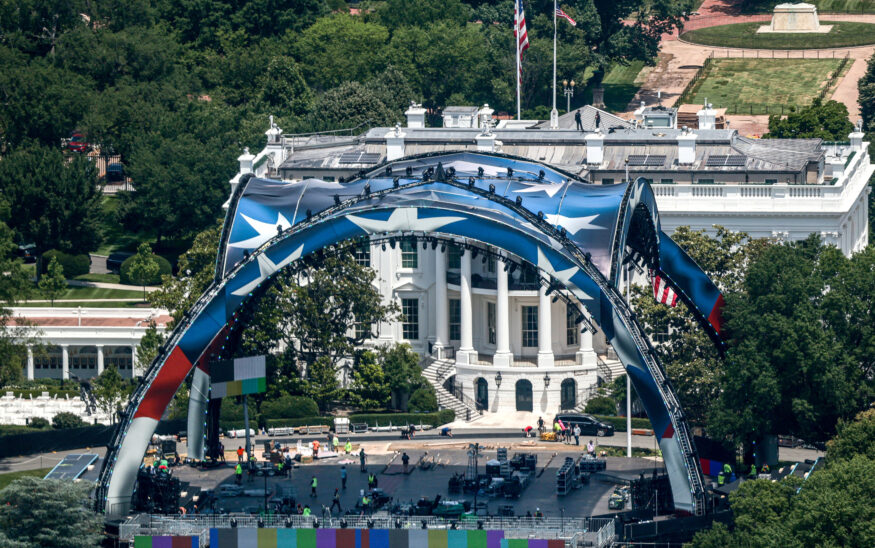
FILE PHOTO: Construction continues on a temporary arena that will host the UFC Freedom 250 fight card at the White House in Washington, D.C., U.S., June 5, 2026. REUTERS/Evelyn Hockstein/File Photo
US judge asked to bar Trump’s UFC fight at White House
Reuters//June 8, 2026//


Summary:
- U.S. District Judge Amit Mehta asked to halt UFC event
- Event called UFC Freedom 250 with 92-foot-tall structure
- Lawsuit challenges National Park Service and Interior Department authorization
A federal judge in Washington has been asked to block President Donald Trump’s plan to host an Ultimate Fighting Championship mixed martial arts bout at the White House next week and to halt construction of the metal arena structure called “the Claw” on the South Lawn of the iconic executive residence.
Two Washington-area residents in a court filing on June 7 asked U.S. District Judge Amit Mehta to issue a temporary restraining order halting the event, scheduled to coincide with Trump’s 80th birthday on June 14.
Mehta on June 8 asked the lawyers in the case to propose a schedule to hear the emergency request.
Dubbed “UFC Freedom 250″, the event is set to feature fighting inside the 92-foot-tall (28 meters), octagon-shaped cage with weigh-ins at the nearby Lincoln Memorial.
The lawsuit, filed on June 6, alleges that authorization of the program by the National Park Service and Interior Department was unlawful and should be set aside.
“This nation’s public monuments should not be loaned out for private exploitation,” the plaintiffs said.
In a statement, the White House called the case an “obstructionist, baseless, and dilatory lawsuit” and said the event “is no different than the various other White House-hosted events on the South Lawn and properly permitted events on the Ellipse and National Mall throughout the year.”
The lawsuit contends the event violates rules barring sporting events on the South Lawn and at the Lincoln Memorial, and that construction of the large arena structure requires congressional authorization.
Trump is facing other lawsuits over construction projects on the White House and elsewhere in the capital, including his plan to build a 90,000-square-foot ballroom on the site of the demolished East Wing, and his proposal to renovate and close the John F. Kennedy Center for the Performing Arts.
Reporting by Mike Scarcella; Editing by David Bario and Bill Berkrot
Related Articles
Related Content



Top Legal News
- US judge asked to bar Trump’s UFC fight at White House
- Trial date set for New Hanover development lawsuit
- SCOTUS News: Drugmaker’s ‘induced infringement’ suit comes up short
- Class certification denied over dealership prize mailer
- Deleted files cost defendants in trade secret case, NC Supreme Court rules
- Telecoms denied right to jury in FCC data security actions
- Anthropic urges AI labs to pause development, warns humans risk losing control
- Guilty plea barred direct appeal of habitual felon challenge
- Fabrication claims revived in wrongful conviction lawsuit
- AG Jackson joins coalition urging Congress to reject federal children’s online safety bill
- US Supreme Court sides with FCC in clash with wireless carriers over fines



Commentary
- AI divorce is real, but family law can still save itself
- ‘AI won’t take your job’ and other things CEOs say before the layoffs
- When not to believe (your lyin’ eyes)
- Conduct a technology audit to improve law firm efficiency
- When the client brings ChatGPT to the consultation
- Content Marketing: Where law firms lose referrals and how to prevent it
- Your best people are not leaving for more money — they are leaving because you stopped paying attention
- Best at Work Insights: The choice we’re making about AI
- New life for the noncompete
- 2026: The year of tech, both heroes and villains
- Beyond burnout: The case for workplaces where people thrive
- The December question every leader should anticipate
