


 Free Newsletter

NC Supreme Court affirms dismissal of indefinite ownership contract claim
North Carolina Lawyers Weekly Staff//June 16, 2026//
NC Supreme Court affirms dismissal of indefinite ownership contract claim
North Carolina Lawyers Weekly Staff//June 16, 2026//


Summary:
- North Carolina Supreme Court affirms Business Court order
- Ownership provision lacked essential terms for enforcement
- Plaintiff sued Autocraft Inc. after termination in 2022
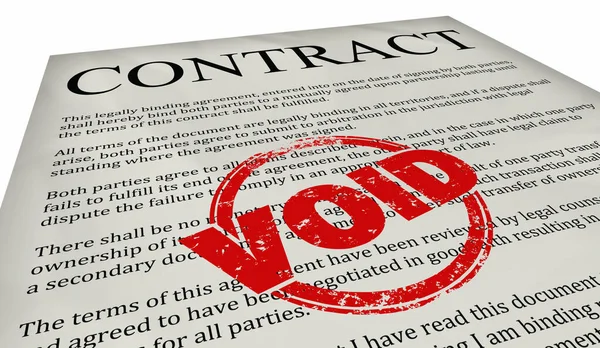
A former employee could not enforce a contractual provision granting him a 10 percent ownership interest in his employer because the provision was too indefinite to constitute an enforceable agreement, the North Carolina Supreme Court has ruled, concluding that the ownership provision lacked essential terms necessary for judicial enforcement and therefore was void for indefiniteness. The ruling modifies and affirms the Business Court’s order.
Plaintiff left defendant Autocraft, Inc. in 2015 but later discussed returning to the company with its founder and sole owner. Before rejoining the company, plaintiff drafted and presented a one-page employment agreement that was signed by both men in December 2016. Among numerous employment terms, the agreement stated that plaintiff would receive “10% ownership of Autocraft Technologies at 5 year mark from start date.” The provision further stated that ownership was contingent upon plaintiff’s decision to become a 10 percent owner, that he could review the company’s books and debt after four years, and that the owner would finance the remaining 90 percent over the following five to 10 years. Plaintiff returned to work for Autocraft in 2017 and remained employed for more than five years before his termination in 2022. He subsequently sued to enforce the ownership provision.
The Business Court granted summary judgment for the defendants, reasoning that the agreement was supported by illusory consideration because plaintiff retained broad discretion over his own performance. On appeal, however, the Supreme Court found that the more fundamental issue was whether the ownership provision was sufficiently definite to be enforced. Examining the agreement as a whole, the court determined that the ownership clause and its related sub-provisions formed a single, integrated arrangement that could not be severed into separate promises. Because those sub-provisions defined the scope of the ownership arrangement, they had to be considered together.
The court concluded that the provision failed because it omitted material terms necessary to establish the parties’ obligations. Most significantly, the agreement did not specify the price plaintiff would pay for the remaining ownership interest, provide a formula for calculating that price, establish financing terms, or set any payment schedule. Enforcing the provision would require the court to create contractual terms that the parties themselves never negotiated or agreed upon. North Carolina law does not permit courts to supply such essential terms where the parties failed to reach a meeting of the minds.
The court also rejected plaintiff’s alternative reliance on the doctrines of quasi-estoppel and mend the hold. It reasoned that neither doctrine could revive a contractual provision lacking definite and enforceable terms. Because the ownership provision was void for indefiniteness, no legal basis existed to compel the transfer of an ownership interest. The court therefore modified the Business Court’s rationale but affirmed the judgment dismissing plaintiff’s claims.
Langley v. Autocraft Inc. (Lawyers Weekly No. 010-023-26, 15 pp.) (Tamara Barringer, J.) Appeal pursuant to N.C.G.S. § 7A-27(a)(2) from an order and opinion entered on July 23, 2024 by Judge Julianna Theall Earp, Special Superior Court Judge for Complex Business Cases, in Superior Court, Guilford County, after the case was designated a mandatory complex business case by the Chief Justice pursuant to N.C.G.S. § 7A-45.4(a). Carruthers & Roth, P.A., by Kevin A. Rust, for plaintiff-appellant. Tuggle Duggins P.A., by Denis E. Jacobson, Richard W. Andrews, Jeffrey S. Southerland, and Daniel D. Stratton, for defendant-appellees. North Carolina Supreme Court
Related Articles
Related Content




Top Legal News
- NC Supreme Court affirms dismissal of indefinite ownership contract claim
- US Supreme Court rebuffs challenge to New York law allowing suits against gun industry
- A useful patent management government notice
- Three-day mailing extension unavailable for administrative appeals
- SCOTUS News: Ex-Twitter employee gets conviction tossed for venue error
- Opinion: NC judges have enormous power. Be sure to vote in November
- Oregon prisons hit with class lawsuit over solitary confinement program
- SCOTUS News: Court nixes private enforcement action under ICA
- Justices revive PI claim omitted from plaintiff’s bankruptcy
- Sam Bankman-Fried loses bid to overturn crypto fraud conviction
- Environmental group failed to show irreparable harm from PFAS discharges



Commentary
- A useful patent management government notice
- Opinion: NC judges have enormous power. Be sure to vote in November
- The third option: Why your best employees are quietly losing their edge
- AI divorce is real, but family law can still save itself
- ‘AI won’t take your job’ and other things CEOs say before the layoffs
- When not to believe (your lyin’ eyes)
- Conduct a technology audit to improve law firm efficiency
- When the client brings ChatGPT to the consultation
- Content Marketing: Where law firms lose referrals and how to prevent it
- Your best people are not leaving for more money — they are leaving because you stopped paying attention
- Best at Work Insights: The choice we’re making about AI
- New life for the noncompete
