


 Free Newsletter

Justices recognize limited jury trial right in prisoner cases
Pat Murphy//June 25, 2025//


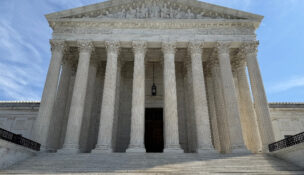
A Michigan prisoner who alleged he was sexually abused by a prison employee and subsequently had his grievance efforts sabotaged is entitled to a jury trial addressing both the claimed violation of his civil rights as well as the government’s contention he failed to exhaust his administrative remedies as required under the Prison Litigation Reform Act, the U.S. Supreme Court ruled 5-4 in affirming a decision from the 6th Circuit.
Click here to read the full text of the June 18 decision in Perttu v. Richards.
BULLET POINTS: “If Congress had expressly provided in the PLRA that exhaustion disputes must be resolved by judges, then we would have been required to consider today whether such a provision violates the Seventh Amendment. But it is a ‘cardinal principle’ that we not address such a constitutional question unless necessary. Meanwhile, as we have shown, the usual practice of the federal courts in cases of intertwinement is to send common issues to the jury. Because nothing in the PLRA suggests Congress intended to depart from that practice here, we hold that parties are entitled to a jury trial on PLRA exhaustion when that issue is intertwined with the merits of a claim protected by the Seventh Amendment.”
— Chief Justice John G. Roberts Jr., opinion of the court
“The Prison Litigation Reform Act of 1995 (PLRA) requires prisoners suing under 42 U. S. C. §1983 to first exhaust the administrative remedies that are ‘available’ to them. In the decision below, the Sixth Circuit held that even if prisoners are not ordinarily entitled to a jury trial to resolve this threshold question, the Seventh Amendment requires a jury when exhaustion is intertwined with the merits. I would reverse. The jury right conferred by the Seventh Amendment does not depend on the degree of factual overlap between a threshold issue and the merits of the plaintiff ‘s claim.…
“Reading the PLRA’s silence to implicitly confer a right to a jury trial contravenes not only basic principles of statutory interpretation, but also several of this Court’s precedents.”
— Justice Amy Coney Barrett, joined by Justices Clarence Thomas, Samuel A. Alito Jr. and Brett M. Kavanaugh, dissenting
Related Articles
Related Content

Top Legal News
- Deleted files cost defendants in trade secret case, NC Supreme Court rules
- Telecoms denied right to jury in FCC data security actions
- Anthropic urges AI labs to pause development, warns humans risk losing control
- Guilty plea barred direct appeal of habitual felon challenge
- Fabrication claims revived in wrongful conviction lawsuit
- AG Jackson joins coalition urging Congress to reject federal children’s online safety bill
- US Supreme Court sides with FCC in clash with wireless carriers over fines
- Oral compensation agreement claim survives against drone company
- US cites forced labor concerns as grounds for new tariffs
- Future mortgage-interest damages recoverable after delayed home closing
- Excessive force allegations against officers survive dismissal



Commentary
- AI divorce is real, but family law can still save itself
- ‘AI won’t take your job’ and other things CEOs say before the layoffs
- When not to believe (your lyin’ eyes)
- Conduct a technology audit to improve law firm efficiency
- When the client brings ChatGPT to the consultation
- Content Marketing: Where law firms lose referrals and how to prevent it
- Your best people are not leaving for more money — they are leaving because you stopped paying attention
- Best at Work Insights: The choice we’re making about AI
- New life for the noncompete
- 2026: The year of tech, both heroes and villains
- Beyond burnout: The case for workplaces where people thrive
- The December question every leader should anticipate
