


 Free Newsletter

SCOTUS reins in environmental review for infrastructure projects
Pat Murphy//May 30, 2025//


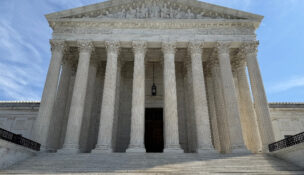
The D.C. Circuit improperly invalidated approval for the construction of an 88-mile rail branch line linking an undeveloped oil field in Utah to the national railway system based on the U.S. Surface Transportation Board‘s failure to consider the environmental effects of upstream and downstream projects that are separate in time or place from the proposed infrastructure project, a unanimous U.S. Supreme Court has ruled.
BULLET POINTS: “[The National Environmental Policy Act] was the first of several landmark environmental laws enacted by Congress in the 1970s. Subsequent statutes included the Clean Air Amendments of 1970, the Clean Water Act of 1972, and the Endangered Species Act of 1973, among others.
“Unlike those later-enacted laws, however, NEPA imposes no substantive environmental obligations or restrictions. NEPA is a purely procedural statute that, as relevant here, simply requires an agency to prepare an [environmental impact statement] — in essence, a report. Importantly, NEPA does not require the agency to weigh environmental consequences in any particular way.
“Rather, an agency may weigh environmental consequences as the agency reasonably sees fit under its governing statute and any relevant substantive environmental laws.
Simply stated, NEPA is a procedural cross-check, not a substantive roadblock. The goal of the law is to inform agency decisionmaking, not to paralyze it.”
— Brett M. Kavanaugh, opinion of the court (Justice Neil M. Gorsuch took no part in the case)
“The National Environmental Policy Act improves agency decisionmaking by requiring agencies to consider environmental impacts for which their decisions would be responsible. I agree with the Court that the Surface Transportation Board would not be responsible for the harms caused by the oil industry, even though the railway it approved would deliver oil to refineries and spur drilling in the Uinta Basin. I reach that conclusion because, under its organic statute, the Board had no authority to reject petitioners’ application on account of the harms third parties would cause with products transported on the proposed railway. The majority takes a different path, unnecessarily grounding its analysis largely in matters of policy. Accordingly, I write separately to explain why the result in this case follows inexorably from our precedent.”
— Justice Sonia Sotomayor, joined by Justices Elena Kagan and Katanji Brown Jackson, concurring
Related Articles
Related Content

Top Legal News
- District court denies California parks department bid to stop Sable Offshore pipeline
- Marketing partner may enforce arbitration agreement
- NC attorney general, DOJ reach settlement ending secret meat pricing data exchange
- Biden sues Justice Department to block release of audio recordings
- Trade secret claims survive restrictive covenant challenge
- Jury returns record award in tragic retaining wall failure case
- Justices revive $100M judgments against cruise lines
- US Supreme Court won’t hear Meta’s challenge to Vermont social media addiction lawsuit
- Adult store clerk sues former Lt. Gov. Mark Robinson
- AI divorce is real, but family law can still save itself
- US Justice Department seeks to lift injunction on ballroom project after shooting



Commentary
- AI divorce is real, but family law can still save itself
- ‘AI won’t take your job’ and other things CEOs say before the layoffs
- When not to believe (your lyin’ eyes)
- Conduct a technology audit to improve law firm efficiency
- When the client brings ChatGPT to the consultation
- Content Marketing: Where law firms lose referrals and how to prevent it
- Your best people are not leaving for more money — they are leaving because you stopped paying attention
- Best at Work Insights: The choice we’re making about AI
- New life for the noncompete
- 2026: The year of tech, both heroes and villains
- Beyond burnout: The case for workplaces where people thrive
- The December question every leader should anticipate
