


 Free Newsletter

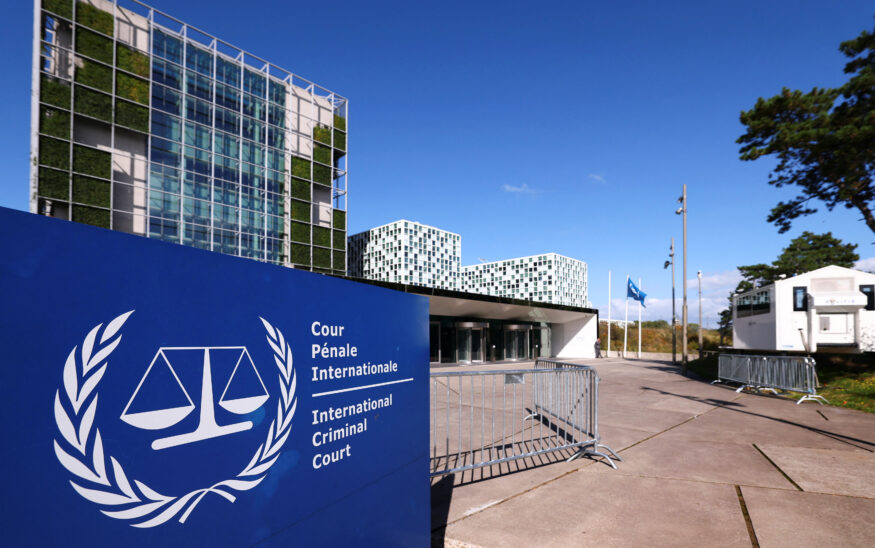
FILE PHOTO: An exterior of The International Criminal Court (ICC) is seen in The Hague, Netherlands, September 22, 2025. REUTERS/Piroschka van de Wouw/File Photo
World court judges sue Trump administration over sanctions
Reuters//June 26, 2026//


Summary:
- ICC judges Prost, Bossa, and Alapini-Gansou sue Trump administration
- Sanctions challenged as exceeding International Emergency Economic Powers Act
- Sanctions block judges from banking, travel, and evidence submission
On June 24, three International Criminal Court judges sued U.S. President Donald Trump and his administration over sanctions imposed on them last year, arguing the measures were unlawful.
In the lawsuit filed in the federal court in Manhattan, judges Kimberly Prost of Canada, Solomy Balungi Bossa of Uganda and Reine Adelaide Sophie Alapini-Gansou of Benin said the sanctions were designed to exert extrajudicial pressure with the objective of punishing and coercing the judges.
A White House official said Trump lawfully exercised his authority under the International Emergency Economic Powers Act (IEEPA) in imposing the sanctions, which the official said dealt with “an unusual and extraordinary threat to the national security and foreign policy of the United States involving the International Criminal Court, including the ICC’s illegitimate and baseless actions targeting America and our close ally Israel.”
“The Administration will continue to vigorously defend the President’s actions — protecting the national security and foreign policy of our country first and foremost,” the official said.
The State and Treasury departments did not respond to requests for comment.
The Trump administration imposed sanctions on several judges at the International Criminal Court last year in an unprecedented retaliation over the war tribunal’s issuance of an arrest warrant for Israeli Prime Minister Benjamin Netanyahu and a past decision to open a case into alleged war crimes by U.S. troops in Afghanistan.
Sanctions severely hamper individuals’ abilities to carry out even routine financial transactions as any banks with ties to the United States, or that conduct transactions in dollars, are expected to have to comply with the restrictions.
The ICC, which was established in 2002, has international jurisdiction to prosecute genocide, crimes against humanity, and war crimes in member states or if a situation is referred by the U.N. Security Council.
Although the ICC has jurisdiction over war crimes, crimes against humanity, and genocide in its 125 member countries, some nations, including the U.S., China, Russia, and Israel, do not recognize its authority.
The Trump administration’s dislike of the court goes back to Trump’s first term. In 2020, Washington imposed sanctions on then-prosecutor Fatou Bensouda and one of her top aides over the court’s work on Afghanistan.
JUDGES CHALLENGE LEGAL BASIS
The lawsuit argues that the sanctions were against the law as they exceeded the scope of IEEPA and were not based on a genuine national emergency or extraordinary threat.
“The Sanctions Regime … is designed to exert extra-judicial pressure on these judges and their colleagues on the ICC bench by targeting their financial and other personal interests, with the objective of punishing them for prior judicial decisions and coercing them into prioritizing their private interests over deciding cases on the basis of the law and facts,” the lawsuit said.
“Being subjected to such sanctions under IEEPA is tantamount to the financial death penalty. Due to the sanctions, Judges Prost, Bossa, and Alapini-Gansou are no longer able, among other things, to use credit cards; access banking services; use common online platforms, such as Amazon and Google; book travel; and in some cases, obtain health insurance,” it said.
The judges also said that the sanctions bar the submission of evidence and argument in any pending or future proceeding before them.
Reporting by Daphne Psaledakis in Washington; Editing by Matthew Lewis
Related Articles
Related Content




Top Legal News
- File-sharing conviction qualifies as crime of child abuse under immigration law
- World court judges sue Trump administration over sanctions
- SCOTUS News: Justices shut down Roundup failure-to-warn claims
- Conservative court candidate’s ties to convicted sex offender draw scrutiny
- Sentencing enhancement vacated for lack of predicate felony findings
- Trump’s power takes center stage in US Supreme Court’s home stretch
- Fraud claims against hospital revived in surgery dispute
- US Supreme Court ends suit alleging Cisco helped China pursue Falun Gong
- US Supreme Court boosts Exxon’s bid to get compensation from Cuba
- SCOTUS News: ‘State-court loser’ can’t seek relief in federal court
- Court of Appeals affirms dismissal of untimely appeal in estate property sale dispute



Commentary
- When is a PIP an adverse employment action?
- Legally Speaking: What spring can teach us about active listening
- A useful patent management government notice
- Opinion: NC judges have enormous power. Be sure to vote in November
- The third option: Why your best employees are quietly losing their edge
- AI divorce is real, but family law can still save itself
- ‘AI won’t take your job’ and other things CEOs say before the layoffs
- When not to believe (your lyin’ eyes)
- Conduct a technology audit to improve law firm efficiency
- When the client brings ChatGPT to the consultation
- Content Marketing: Where law firms lose referrals and how to prevent it
- Your best people are not leaving for more money — they are leaving because you stopped paying attention
