


 Free Newsletter

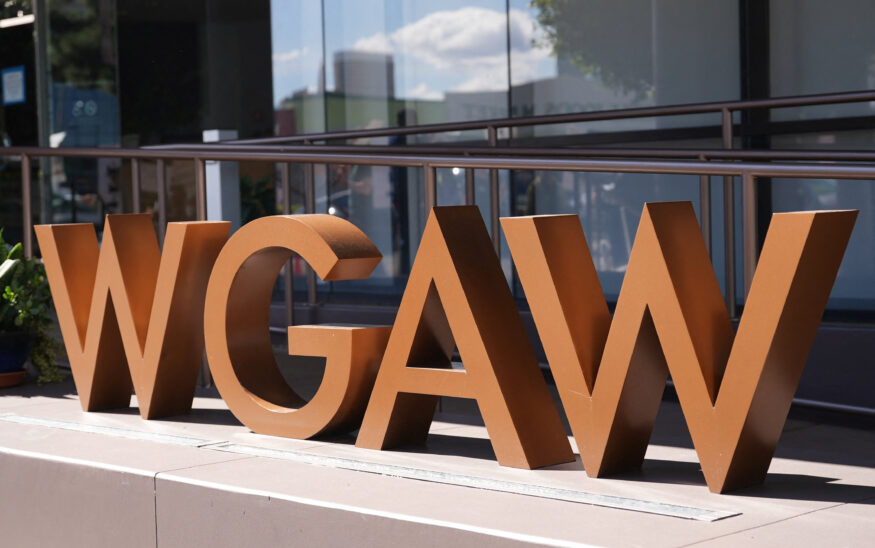
The Writers Guild of America West logo stands as Writers Guild staff take part in a strike outside the WGAW headquarters in Hollywood, Los Angeles, California, U.S., February 18, 2026. REUTERS/Arafat Barbakh
Writers Guild sues to block Paramount deal, saying it would hurt writers
Reuters//July 15, 2026//


Summary:
- Writers Guild files lawsuit in San Francisco federal court
- Paramount seeks to acquire Warner Bros discovery for $110 billion
- Case parallels DOJ’s blocked Penguin Random House Simon & Schuster merger
The Writers Guild of America sued on July 14 to block Paramount’s $110 billion acquisition of Warner Bros Discovery, saying the deal would jeopardize writers’ livelihoods and threaten the health of U.S. entertainment.
The case is another blow to Paramount’s bid to become a bigger rival to Netflix and Disney, a day after California and 11 other states sued to block the deal. Paramount, which argued the combination would increase opportunities for writers, must now deal with a double dose of legal work.
The Writers Guild said in its lawsuit filed in San Francisco federal court that the deal would reduce the number of buyers in Hollywood for films and TV shows, harming its members.
“With fewer competitors, the merged Paramount-Warner Bros. entity would have both the incentive and the ability to lower costs by suppressing writers’ wages and reducing output. Writers will be paid less and have fewer employment opportunities,” the WGA complaint said.
The union, made up of the Writers Guild of America West and Writers Guild of America East, has 18,000 members across the entertainment industry.
The Writers Guild said that by combining two of five major Hollywood studios, the merger would unlawfully concentrate demand for writers of top-grossing films and episodic television series, and decrease the bargaining power of writers who enter exclusive deals with studios.
The Writers Guild pointed to a case brought by the U.S. Department of Justice that successfully blocked Penguin Random House’s bid to buy rival Simon & Schuster, on grounds that it would hinder competition in the market for top-selling books and lower advances paid to authors.
That case hinged on the argument that the combined company would control close to half the market for publishing, an effective monopsony that would leave hundreds of individual authors with fewer options and less leverage.
Related Articles
Related Content





Legal Tech
- Gemini Legal launches DraftEngine for civil litigation forms
- Lawyers continue to grapple with AI ethical issues
- Are AI prompts privileged? Time will tell
Top Legal News
- Teacher sues Gaston County Schools for firing over Charlie Kirk comment
- Musk’s xAI sues Grok user over sexualized ‘deepfakes’
- ‘Never maneuver’ leads to lifelong birth injury, seven-figure verdict
- Firearm suppressed after officers seized parked motorist without reasonable suspicion
- Writers Guild sues to block Paramount deal, saying it would hurt writers
- Buncombe Commissioner Jennifer Horton sues the county. They respond.
- US appeals court revives hundreds of private lawsuits linking Tylenol to autism






Commentary
- We tore out our own backup generator
- When is a PIP an adverse employment action?
- Legally Speaking: What spring can teach us about active listening
- A useful patent management government notice
- Opinion: NC judges have enormous power. Be sure to vote in November
- The third option: Why your best employees are quietly losing their edge
- AI divorce is real, but family law can still save itself
- ‘AI won’t take your job’ and other things CEOs say before the layoffs
