


 Free Newsletter

NC hemp industry rallies against bill it calls a ban in disguise
North Carolina Lawyers Weekly Staff//August 4, 2026//


Summary:
- House Bill 328 limits hemp THC to 0.3% and 0.4 mg per container
- Senate passed bill 37-6 with bipartisan support
- Rep. Reece Pyrtle leads law enforcement backing the bill
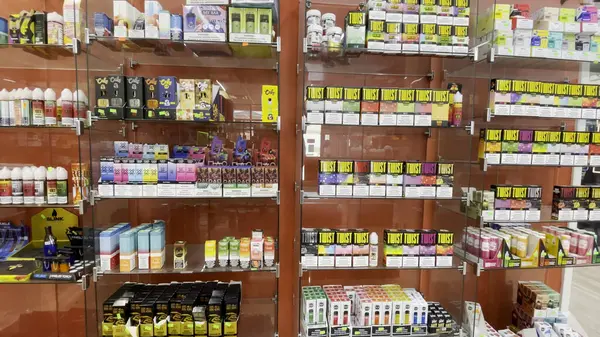
North Carolina’s hemp industry is bracing for a pivotal vote this week as the state House considers legislation that supporters say would bring needed regulation to an uncontrolled market, but that hemp business owners say would effectively destroy their industry overnight, according to the Raleigh News & Observer.
House Bill 328, a conference report that cannot be amended on the floor, would prohibit hemp use by anyone under 21 and mirror a new federal definition of hemp set to take effect November 12. Under the bill, hemp products could contain no more than 0.3% total THC, or 0.4 mg of total THC per container, a standard that critics say would wipe out the vast majority of hemp products currently on the market, the N&O reported. The legislation would also ban synthetic kratom products, restrict regular kratom to those 21 and older, and make xylazine a Schedule III controlled substance.
Hemp business owners and employees rallied at the legislature on Aug. 4, calling on House members to reject the bill, the N&O reported. On the other side, law enforcement agencies held a press conference in support of the legislation, led by Rep. Reece Pyrtle, a Rockingham County Republican and retired police chief, alongside leaders from the NC Conference of District Attorneys, NC Association of Chiefs of Police, NC State Bureau of Investigation and NC State Highway Patrol.
“When all law enforcement is in agreement on an issue — that even at the state level, local level, when we all agree on a public safety issue — I think people should pay attention and take notice,” said Lauren Earnhardt, deputy executive vice president of the NC Sheriffs’ Association, according to the N&O.
But hemp industry advocates say the bill goes far beyond protecting children. Melissa Johnston, vice president of strategic development at Tryon Distributing and a leader in hemp business advocacy efforts, compared the bill to prohibiting alcohol but banning anything with more than 0.4% alcohol by volume, the N&O reported.
“It feels more like a ban bill disguised as a regulation bill,” Johnston told the N&O. She said many in the industry had called for sensible regulation for years but that this version “seemingly popped out of nowhere.”
Lauren Miller, co-founder of Wims, a North Carolina hemp beverage company that has grown from a family farm in Summerfield into a nationally recognized brand employing more than 15 people, told the N&O the bill would be catastrophic.
“This ban would destroy us overnight — not only our business but also our manufacturer in Roxboro,” Miller said. “You have a lot of very responsible operators in North Carolina, and there are some bad actors that need to be regulated out. A ban would actually destroy all the responsible businesses and create room in a black market for the less responsible operators that need to be regulated.”
The Senate passed the conference report 37-6 with bipartisan support, the N&O reported. The bill still needs House passage and Gov. Josh Stein’s signature to become law. Stein said Monday on X that the bill “aims to eliminate the Wild West that is North Carolina’s THC market,” but raised concerns that it also legalizes kratom, which he called “an opioid-like substance sometimes called gas station heroin,” according to the N&O.
Opposition to the bill has spread beyond the hemp industry to include the NC Restaurant and Lodging Association, the NC Brewers Guild and the Law Enforcement Action Partnership, a national organization of current and former law enforcement professionals that agreed on the need for age restrictions but opposed bundling them with a broader ban, the N&O reported.
House Speaker Destin Hall, who controls what bills come to the floor for a vote, told reporters in early July that he personally supported cracking down on products sold in gas stations but that the caucus needed time to study the bill.
“If the caucus wants to do it, it’ll get a vote,” Hall told the N&O.
Related Articles
Related Content





Top Legal News
- Beware of overlooking legal requirements for remote workers
- NC House pulls hemp bill after hundreds of protesters descend on legislature
- U.S. senator urges regulators to probe Wall Street banks over Epstein accounts
- NC hemp industry rallies against bill it calls a ban in disguise
- U.S. Supreme Court won’t halt $655M judgment against Palestinians over attacks
- Oklahoma court tosses conviction of YouTuber who went to prison for online rant
- DNA fight grows as civil suit advances in SC Murdaugh retrial




Legal Tech
- AI is reshaping family law practice, but attorneys worry about DIY research
- Massachusetts court rejects work product protection for AI documents by girlfriend
- Exterro launches on-premises AI platform for digital forensics
Commentary
- Legally Speaking: How communication failures turn disputes into lawsuits
- We tore out our own backup generator
- When is a PIP an adverse employment action?
- Legally Speaking: What spring can teach us about active listening
- A useful patent management government notice
- Opinion: NC judges have enormous power. Be sure to vote in November
- The third option: Why your best employees are quietly losing their edge
- AI divorce is real, but family law can still save itself
