


 Free Newsletter

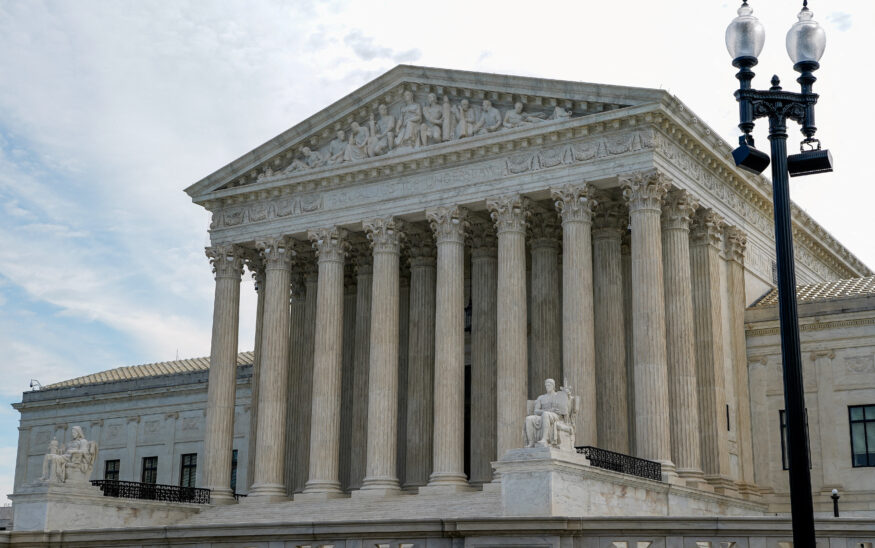
FILE PHOTO: The U.S. Supreme Court in Washington, D.C., U.S., June 25, 2026. REUTERS/Elizabeth Frantz/File Photo
U.S. Supreme Court won’t halt $655M judgment against Palestinians over attacks
Reuters//August 4, 2026//


U.S. Supreme Court Justice Sonia Sotomayor declined on Aug. 3 to halt $655.5 million in damages that Palestinian authorities were ordered to pay plaintiffs in a civil suit over attacks that killed and injured Americans in Israel from 2002 to 2004.
Sotomayor denied a request by the Palestinian Authority and the Palestine Liberation Organization to put on hold the judgment while they appeal a lower court’s decision to revive the case years after it had been dismissed.
The lawsuit was brought on behalf of Americans killed or injured in those shootings and bombings in the Jerusalem area.
The Supreme Court last year upheld a federal law that allowed claims like those brought by the plaintiffs in the case.
Sotomayor did not explain her decision and did not refer the case to the entire court. Sotomayor handles emergency matters for cases arising from New York and certain other states.
The Manhattan-based 2nd U.S. Circuit Court of Appeals reinstated the judgment in March following the Supreme Court’s 9-0 decision in June 2025 to uphold the 2019 law, called the Promoting Security and Justice for Victims of Terrorism Act.
The Palestinian organizations said that enforcing the judgment in the case will cause severe financial harm and destabilize government services in the West Bank, harming people who live there and jeopardizing regional security.
They said in a written filing that the plaintiffs intend to seek payment from indirect Palestinian tax revenue collected by Israel, a key source of funding for Palestinian government operations. Security, sanitation and school services in the West Bank “are hanging by a thread,” they wrote.
The plaintiffs, in winning the judgment in New York federal court in 2015, alleged that the Palestinian entities were responsible for the incidents from 2002 to 2004.
The 2nd Circuit threw out that verdict in 2016 and ordered that the case be dismissed, concluding that the federal judge in the case did not have jurisdiction over the matter. The Supreme Court declined to hear an appeal of the case in 2018.
Congress then passed the 2019 law to facilitate lawsuits against Palestinian authorities. Under the law, the PLO and Palestinian Authority automatically “consent” to jurisdiction if they conduct certain activities in the United States or make payments to people who attack Americans.
The 2nd Circuit subsequently decided that the 2019 law violated the rights of those Palestinian authorities to due process under the U.S. Constitution. But the Supreme Court overturned that ruling last year.
Following that Supreme Court action, the 2nd Circuit resurrected the judgment for the plaintiffs.
The Palestinian authorities urged the Supreme Court to halt the payment for now, saying the judgment had long become void and a “nullity.”
“The money judgment at issue became a legal nullity when … appeals were exhausted in 2018,” they said.
(Reporting by Andrew Chung; Editing by Will Dunham)
Related Articles
Related Content






Top Legal News
- Beware of overlooking legal requirements for remote workers
- NC House pulls hemp bill after hundreds of protesters descend on legislature
- U.S. senator urges regulators to probe Wall Street banks over Epstein accounts
- NC hemp industry rallies against bill it calls a ban in disguise
- U.S. Supreme Court won’t halt $655M judgment against Palestinians over attacks
- Oklahoma court tosses conviction of YouTuber who went to prison for online rant
- DNA fight grows as civil suit advances in SC Murdaugh retrial




Legal Tech
- AI is reshaping family law practice, but attorneys worry about DIY research
- Massachusetts court rejects work product protection for AI documents by girlfriend
- Exterro launches on-premises AI platform for digital forensics
Commentary
- Legally Speaking: How communication failures turn disputes into lawsuits
- We tore out our own backup generator
- When is a PIP an adverse employment action?
- Legally Speaking: What spring can teach us about active listening
- A useful patent management government notice
- Opinion: NC judges have enormous power. Be sure to vote in November
- The third option: Why your best employees are quietly losing their edge
- AI divorce is real, but family law can still save itself
