


 Free Newsletter

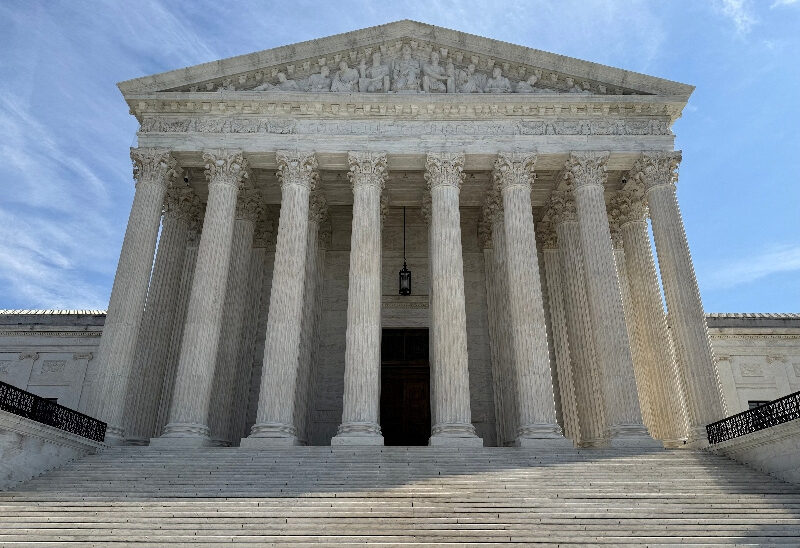
SCOTUS News: State concealed-carry restriction violates 2nd Amendment
Pat Murphy//June 28, 2026//


AT A GLANCE
· U.S. Supreme Court ruled 6-3 that Hawaii’s private-property firearm restriction violates the Second and Fourteenth Amendments.
· The law barred concealed-carry permit holders from carrying firearms on private property open to the public without express owner consent.
· The Court found the law sharply departed from traditional property access rules and substantially burdened lawful gun owners.
· The decision reverses the 9th Circuit and builds upon the Court’s landmark ruling in New York State Rifle & Pistol Assn., Inc. v. Bruen.
A state law prohibiting licensed concealed-carry permit holders from carrying handguns on private property open to the public without the property owner’s express authorization violates the Second and Fourteenth Amendments, the U.S. Supreme Court has ruled in a 6-3 decision.
In response to the U.S. Supreme Court’s 2022 decision in New York State Rifle & Pistol Assn., Inc. v. Bruen, Hawaii in 2023, New Jersey in 2024, Maryland in 2025 and New York in 2025 enacted laws that prohibit firearms on private property open to the public without the express and affirmative consent of the property owner.
The petitioners in the case before the Supreme Court are three residents of Maui County who possess concealed-carry permits and an organization of concealed-carry permit holders. The petitioner sued in federal court, alleging Hawaii’s law violated their rights under the U.S. Constitution.
A federal judge enjoined enforcement of the law, but a panel of the 9th U.S. Circuit Court of Appeals reversed.
The Supreme Court granted certiorari. In reversing the 9th Circuit, the court concluded the Hawaii law violates the constitutional right to keep and bear arms.
Click here to read the full text of the Supreme Court’s June 25 decision in Wolford v. Lopez.
To the point
“For years, the State of Hawaii made it almost impossible to obtain a license to carry a firearm. Four years ago, however, this Court held in New York State Rifle & Pistol Assn., Inc. v. Bruen, that the Second and Fourteenth Amendments protect the right to carry handguns outside the home for self-defense. Hawaii responded by replacing its old law on carry permits with new laws that achieved a similar result. On a large portion of the land within the State’s boundaries, possession of a firearm is now flatly prohibited. And the law now before us severely burdens the ability to carry a firearm in much of the rest of the State by prohibiting firearms on private property without the express and affirmative consent of the property owner.
“This law departs sharply from the standard common-law rule on access to private property held open to the public. Under that rule, everyone, including those lawfully carrying firearms, may enter unless expressly prohibited from doing so. By contrast, under the new Hawaii law, no one carrying a firearm may enter without the property owner’s express authorization. The effect of this new rule is to impose severe restrictions on the daily activities of residents who have satisfied the State’s rigorous requirements for the issuance of a carry permit. When these permit holders leave home in the morning, not only must they take care to avoid all the territory where the possession of a gun is prohibited outright, but they may also be barred from entering many places that people routinely visit in the course of their daily routines, such as gas stations, convenience stores, restaurants, coffee shops, drug stores, grocery stores, ‘big box’ stores, home improvement stores, barber shops or hair salons, dry cleaners, and laundromats.
“This regime hobbles what the Second Amendment protects: the right of Americans to carry arms for self-defense as they go about their daily lives.”
— Justice Samuel A. Alito Jr., joined by Chief Justice John G. Roberts Jr. and Justices Clarence Thomas, Neil M. Gorsuch, Brett M. Kavanaugh and Amy Coney Barrett, opinion of the court
“It is irrelevant, for purposes of the [Second] Amendment’s plain text, that a property owner has the right to exclude anyone who wishes to enter her property with firearms. No one doubts that all property owners in Hawaii could bar the carry of arms on their respective premises, if they wanted to. But the Second Amendment does not apply to private parties. It does apply to the States. And when a State enacts a property law that regulates arms-bearing conduct, that law implicates the Second Amendment….
“Applying old principles to new circumstances is not always easy. This case, however, is not hard. While most Hawaiians might prefer that no one carry firearms in public places, a majority’s opposition to a constitutional right is not a permissible basis for restricting it. After all, ‘[t]he very purpose of a Bill of Rights was to withdraw certain subjects from the vicissitudes of political controversy’ and ‘to place them beyond the reach of majorities and officials.’”
— Justice Amy Coney Barrett, joined by Justices Clarence Thomas and Neil M. Gorsuch, concurring
“I would uphold the challenged Hawaii law because … it is a modern-day analogue of colonial and founding era laws that similarly prohibited carrying firearms onto private property without the owner’s affirmative consent. The ‘how’ is identical: The new law, just like the old ones, sets a default rule against gun carry that a private landowner may reverse. The ‘why’ is sufficiently close. Both sets of laws respond to the dangers and harms that someone with a gun can cause on another person’s property. That the old laws had a special (though by no means exclusive) concern with poaching does not matter.
‘The regulatory challenges posed by firearms today are not always the same as those that preoccupied’ earlier generations. The key question is whether the challenged regulation is ‘consistent with the principles that underpin our regulatory tradition.’ Here, the challenged law is consistent with those principles because it reflects, as the old laws did, the perceived ‘abuses, damages and inconveniences’ that can be caused by persons carrying guns ‘on other people’s lands.’”
— Justice Elena Kagan dissenting
“Today the Court declares unconstitutional Hawaii’s efforts to protect the rights of its residents — both those who wish to carry guns and those who prefer that guns are not carried on their private property without their express permission. To hear the majority tell it, Hawaii’s law is a blatant attempt to end-run our Second Amendment precedents. But the statute at issue does no such thing. Instead, it fairly applies a first principle of property law—the right to exclude—and does no harm to the Second Amendment.
“The majority thinks otherwise; it reaches today’s result by purporting to apply the test we established in New York State Rifle & Pistol Assn., Inc. v. Bruen. But the majority gets both the Bruen test and its application wrong. Hawaii’s law does not implicate the Second Amendment because there is no right to carry a gun onto private property without consent (as all agree), and the Constitution does not dictate the form of that required consent. And even if the Second Amendment were implicated here, Hawaii has proffered ample analogues demonstrating a history and tradition of States protecting their residents’ property rights by requiring those wishing to carry guns onto private property to get express consent from the property owner before doing so.
“For what it is worth, I think Bruen was wrongly decided. But if it is going to be our precedent, the majority should at least endeavor to apply it faithfully. I respectfully dissent because the majority has failed to do so here, and its analysis and conclusion only further bind the hands of modern legislatures attempting to balance and protect their residents’ interests. With this decision, the Court has now manipulated Bruen into a free-for-all that lets the Judiciary thwart the will of legislatures by privileging access to firearms above all else. Today’s decision makes one thing clear: The Court’s objective is protecting guns, not consistently preserving any principle of law.”
—Justice Ketanji Brown Jackson, joined by Justice Sonia Sotomayor, dissenting
Related Articles
Related Content

Top Legal News
- Limited hearing ordered on counsel’s failure to use evaluation report
- As Supreme Court’s term nears its end, three major Trump rulings due
- SCOTUS News: State concealed-carry restriction violates 2nd Amendment
- File-sharing conviction qualifies as crime of child abuse under immigration law
- World court judges sue Trump administration over sanctions
- SCOTUS News: Justices shut down Roundup failure-to-warn claims
- Conservative court candidate’s ties to convicted sex offender draw scrutiny
- Sentencing enhancement vacated for lack of predicate felony findings
- Trump’s power takes center stage in US Supreme Court’s home stretch
- Fraud claims against hospital revived in surgery dispute
- US Supreme Court ends suit alleging Cisco helped China pursue Falun Gong



Commentary
- When is a PIP an adverse employment action?
- Legally Speaking: What spring can teach us about active listening
- A useful patent management government notice
- Opinion: NC judges have enormous power. Be sure to vote in November
- The third option: Why your best employees are quietly losing their edge
- AI divorce is real, but family law can still save itself
- ‘AI won’t take your job’ and other things CEOs say before the layoffs
- When not to believe (your lyin’ eyes)
- Conduct a technology audit to improve law firm efficiency
- When the client brings ChatGPT to the consultation
- Content Marketing: Where law firms lose referrals and how to prevent it
- Your best people are not leaving for more money — they are leaving because you stopped paying attention
