


 Free Newsletter

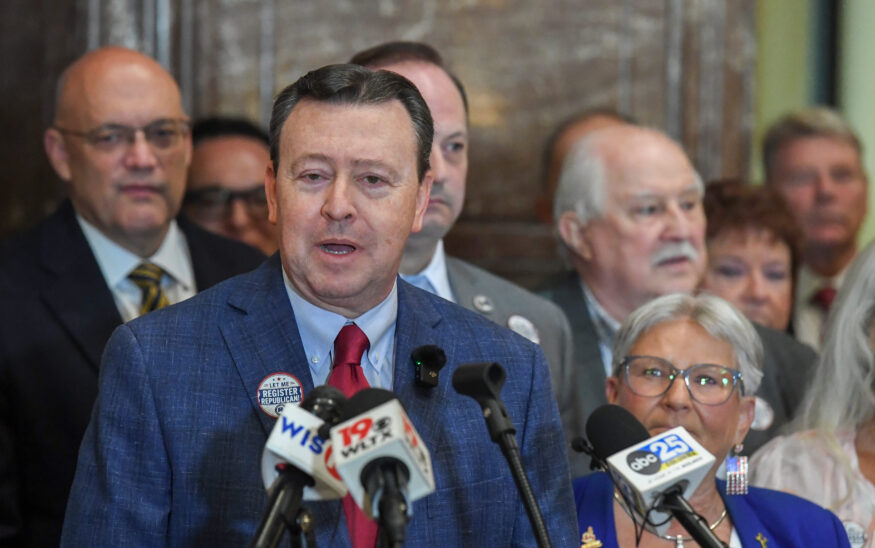
South Carolina Republican Party Chairman Drew McKissick speaks Tuesday, May 12, 2026, during a press conference announcing the South Carolina Republican Party’s plan to file a federal lawsuit over the state not offering the ability to register to vote under a political party at the State House in Columbia, South Carolina.
SC GOP announces plans to file a federal lawsuit to close primaries
Reuters//May 13, 2026//


Summary:
- South Carolina Republican Party announces lawsuit plans
- SCGOP Chair Drew McKissick supports party membership control
- Attorney General Alan Wilson backs the GOP lawsuit
The South Carolina Republican Party is planning to file a federal lawsuit to change the state’s primary voting process and require voters to register to a political party.
South Carolina voters do not have to register by political party, and are able to vote in either political party’s primary. State Republican lawmakers have pushed for legislation to close the state’s primary elections, but they have been unsuccessful in passing it.
South Carolina Republican Party leadership held a press conference at the statehouse in Columbia on May 12 to announce the new lawsuit related to closed primaries and required partisan voter registration.
SCGOP Chair Drew McKissick said that South Carolina political parties have the right under state law to define the terms of party membership and dictate who votes in their primaries. He said the law doesn’t offer the tool to enforce that policy.
“Many people who are not Republicans choose Republican nominees,” McKissick said. “That’s like allowing Carolina or Clemson fans to choose which players the other team puts on the field.”
U.S. Rep. Ralph Norman, R-District 5, is campaigning on closed primaries in his run for South Carolina governor. He said now is the time to institute closed primaries in South Carolina.
“I’m glad to see the party moving forward with it, and I look forward to having our day in court,” Norman said.
Last fall, the Republican Party of Texas filed a federal lawsuit against the state to close its primaries. The Texas Republican Party argued that the First Amendment gives political parties the right to determine who votes in their election.
Attorney General Alan Wilson offered his support to the South Carolina Republican Party as it takes up the lawsuit. The South Carolina Republican Party has not yet filed the suit, but McKissick said he expects the lawsuit to be filed shortly after the June 9 primary elections.
Reporting by Bella Carpentier, Greenville News
USA TODAY Network via Reuters Connect
Related Articles
Related Content





Top Legal News
- AG Jackson sues federal agencies over Medicaid rule threatening coverage for cancer patients
- Supreme Court strengthens Trump’s hold on key levers of government power
- US Supreme Court takes up Pepsi ‘Mtn Dew Rise’ trademark dispute
- SCOTUS News: 4th Amendment extended to cellphone location data
- Jury consulting booms in the Carolinas
- SCOTUS News: Court rules customs agents can turn back asylum seekers
- Limited hearing ordered on counsel’s failure to use evaluation report
- As Supreme Court’s term nears its end, three major Trump rulings due
- SCOTUS News: State concealed-carry restriction violates 2nd Amendment
- File-sharing conviction qualifies as crime of child abuse under immigration law
- World court judges sue Trump administration over sanctions



Commentary
- When is a PIP an adverse employment action?
- Legally Speaking: What spring can teach us about active listening
- A useful patent management government notice
- Opinion: NC judges have enormous power. Be sure to vote in November
- The third option: Why your best employees are quietly losing their edge
- AI divorce is real, but family law can still save itself
- ‘AI won’t take your job’ and other things CEOs say before the layoffs
- When not to believe (your lyin’ eyes)
- Conduct a technology audit to improve law firm efficiency
- When the client brings ChatGPT to the consultation
- Content Marketing: Where law firms lose referrals and how to prevent it
- Your best people are not leaving for more money — they are leaving because you stopped paying attention
